Thai Massage vs Swedish Massage: Key Differences
When it comes to unwinding, relieving tension, and reconnecting with your body, massage therapy offers a powerful path to relaxation. Two of the most popular styles, Thai massage and Swedish massage, are often compared, but they stem from very different traditions and offer distinct experiences. Whether you are seeking deep relief, a boost in mobility, or a gentle mental reset, understanding the differences can help you choose the right therapy for your specific needs. Depending on your goals, one may provide the physical release you crave while the other offers the mental stillness you need.
Let’s explore how Thai and Swedish massages compare across technique, philosophy, benefits, and overall experience.
🌿 Origins & Philosophy
Thai Massage:
Rooted in ancient Ayurvedic and Buddhist traditions, Thai massage, also called Nuad Boran, has been practiced in Thailand for over 2,500 years. This modality is deeply intertwined with spiritual healing and the belief that the body is a conduit for energy. It is not just a physical treatment, it is considered a healing art that works with the body’s energy lines, known as Sen lines, to restore balance. This is similar to the concepts found in acupressure or traditional Chinese medicine. The philosophy focuses on the holistic connection between the mind, body, and spirit. Practitioners use their hands, thumbs, elbows, knees, and even feet to apply targeted pressure and guide the recipient through a series of rhythmic stretches. The goal is to unblock energy pathways, which is believed to improve overall health and mental clarity.
Swedish Massage:
Developed in the 19th century by Swedish physiologist Per Henrik Ling, Swedish massage is the foundation of Western massage therapy. Unlike the energy based approach of Thai traditions, Swedish massage is rooted in anatomical principles and physiology. It focuses on improving blood circulation, releasing muscle tension, and promoting systemic relaxation through the systematic manipulation of soft tissues. By targeting the superficial layers of muscle, it helps flush out metabolic waste and reduces the cortisol levels associated with stress. It is often what people picture when they think of a classic massage, providing a standardized approach to wellness that emphasizes comfort and the physiological response of the nervous system.
👐 Technique & Approach
Thai Massage:
Thai massage is a highly dynamic experience that differs significantly from the typical spa setting. It is performed on a firm mat on the floor rather than a table. This allows the therapist to use their entire body weight to apply pressure and provides a stable surface for stretching. A key distinction is that the client remains fully clothed in loose, comfortable attire, such as cotton pants and a shirt, to allow for a full range of motion.
This style involves active participation. The therapist moves your body into yoga like stretches while applying rhythmic pressure along energy lines. You are not simply a passive recipient, as the therapist may pull, push, and rotate your limbs to open up the joints. No oils or lotions are typically used because the focus is on compression and stretching rather than gliding over the skin. The experience feels more like assisted yoga or a dynamic bodywork session, often leaving the recipient feeling more awake and alert.
Swedish Massage:
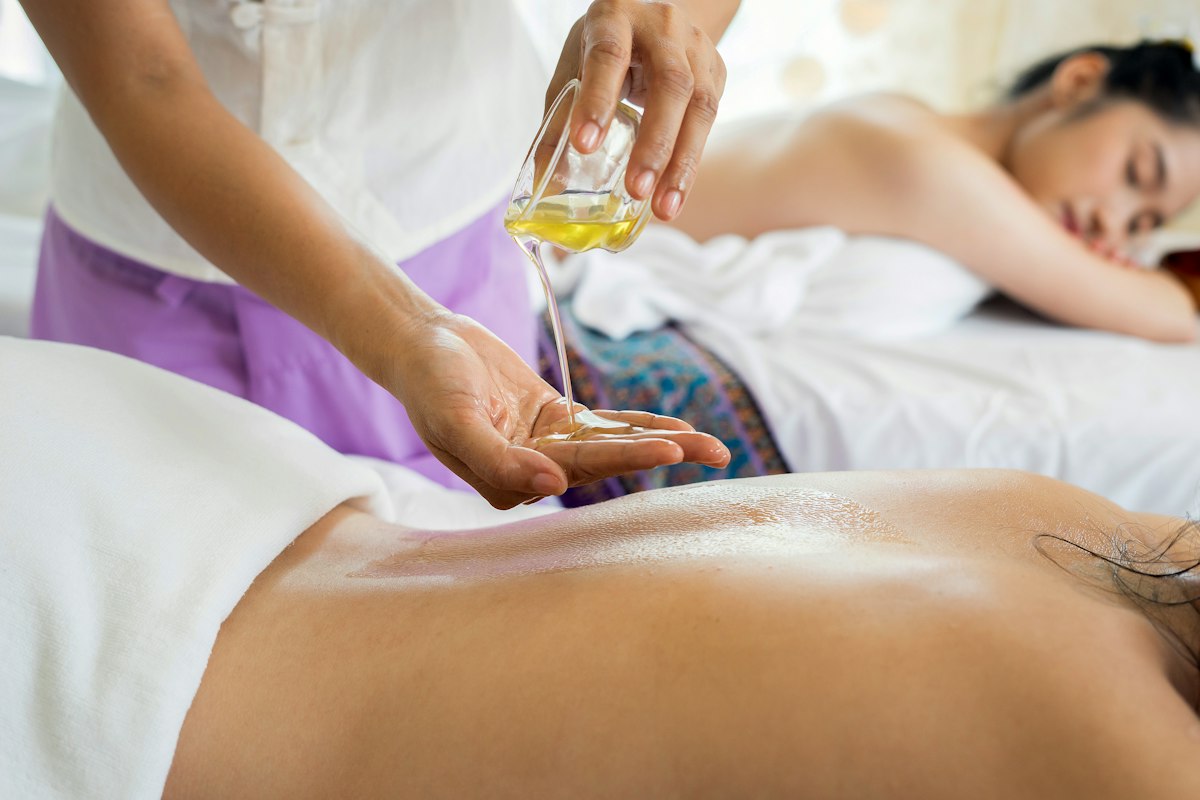
Swedish massage is designed for total surrender and tranquility. It is conducted on a padded massage table with the client partially or fully undressed, though you are always covered by a sheet for modesty and warmth. To facilitate smooth movements, the therapist uses lubricants such as organic oils or soothing lotions. These lubricants reduce friction on the skin, allowing the therapist to apply a consistent flow of pressure.
The approach relies on five primary techniques:
- Effleurage: Long, gliding strokes that warm up the muscles and move lymph fluid.
- Petrissage: Kneading and squeezing movements that target deeper muscle knots.
- Friction: Deep circular movements used to break up adhesions in the fascia.
- Tapotement: Rhythmic tapping or hacking to stimulate nerves and wake up the muscles.
- Vibration: Shaking or trembling motions used to relax a specific area.
These methods focus on manipulating muscles and soft tissues to increase blood flow, reduce inflammation, and lower the heart rate for a state of deep calm.
💆♀️ Pressure & Intensity
Thai Massage:
The intensity of a Thai massage can be surprising to those used to Western styles. Pressure can range from gentle to quite firm, often incorporating the therapist's body weight and leverage to achieve depth. Because the therapist uses elbows and knees, the pressure is more concentrated than a palm stroke. The stretching component can feel intense, especially if you are not naturally flexible. However, it is a collaborative process. Your therapist will monitor your breathing and adjust the depth of the stretch to your comfort level to ensure you never feel strained. This is best for those who enjoy active engagement and do not mind a workout like sensation during their treatment.
Swedish Massage:
In contrast, Swedish massage is generally more passive and gentle. Pressure is typically adjustable, ranging from a light touch for pure relaxation to firmer, deeper work for those with mild muscle soreness. You lie still while the therapist works on you, allowing your mind to drift and your muscles to melt into the table. Because it avoids the aggressive stretching found in Thai work, it is ideal for stress relief, recovering from a long flight, or for those who are new to massage and prefer a predictable, soothing experience.
🎯 Primary Benefits
| Benefit | Thai Massage | Swedish Massage |
|---|---|---|
| Improves flexibility & range of motion | ✅✅✅ (Excellent) | ✅ (Moderate) |
| Relieves muscle tension | ✅✅ | ✅✅✅ (Strong) |
| Boosts circulation | ✅✅ | ✅✅✅ |
| Reduces stress & anxiety | ✅✅ | ✅✅✅ |
| Enhances energy flow (per traditional belief) | ✅✅✅ | ❌ (Not a focus) |
| Promotes deep relaxation | ✅✅ | ✅✅✅ |
| Helps with posture & alignment | ✅✅✅ | ✅ |
🧘 Who Is It Best For?
Choose Thai Massage if you:
- Enjoy yoga, Pilates, or regular stretching.
- Want a more invigorating and energizing session that wakes up the body.
- Prefer to stay clothed during the massage for comfort or modesty.
- Are looking to improve flexibility or relieve joint stiffness caused by sitting at a desk or intense athletic activity.
- Do not mind a more active, participatory experience where you are moved into different positions.
- Seek a holistic approach that addresses both physical tension and energy blockages.
Choose Swedish Massage if you:
- Want a classic, soothing relaxation massage to shut off your brain.
- Are new to massage therapy and want a gentle introduction.
- Prefer a passive experience where you can fully unwind and perhaps even fall asleep.
- Have localized muscle tension, such as tightness in the neck, shoulders, or lower back, that requires targeted kneading.
- Enjoy the use of aromatic oils, warm towels, and a quiet, spa like ambiance.
- Need to lower your blood pressure and reduce overall systemic stress.
💡 Final Thoughts
Neither massage is better than the other, it is entirely about what your body and mind need in the moment. If you feel stagnant, stiff, or mentally foggy, Thai massage offers a dynamic, holistic blend of acupressure, stretching, and energy work that leaves you feeling both relaxed and revitalized. It is like you have just finished a rewarding yoga session without having to do the hard work yourself.
On the other hand, if you are exhausted, overwhelmed by stress, or physically depleted, Swedish massage is the answer. With its flowing strokes and focus on circulation and tension release, it is the go to for pure, indulgent relaxation.
Many wellness enthusiasts find value in alternating between the two. You might use Swedish massage for weekly unwinding to manage stress and then schedule a Thai massage once a month for deeper flexibility work or when you feel energetically blocked.
Whichever you choose, both are powerful tools for nurturing your well being. Listen to your body, communicate openly with your therapist about your pressure preferences, and enjoy the journey toward greater ease and balance.
💬 Have you tried both? Which do you prefer, and why? Share your experience in the comments below!
Category: Relax
Looking to book a session? Always consult with a licensed massage therapist to discuss your health history and goals for a safe, personalized experience.