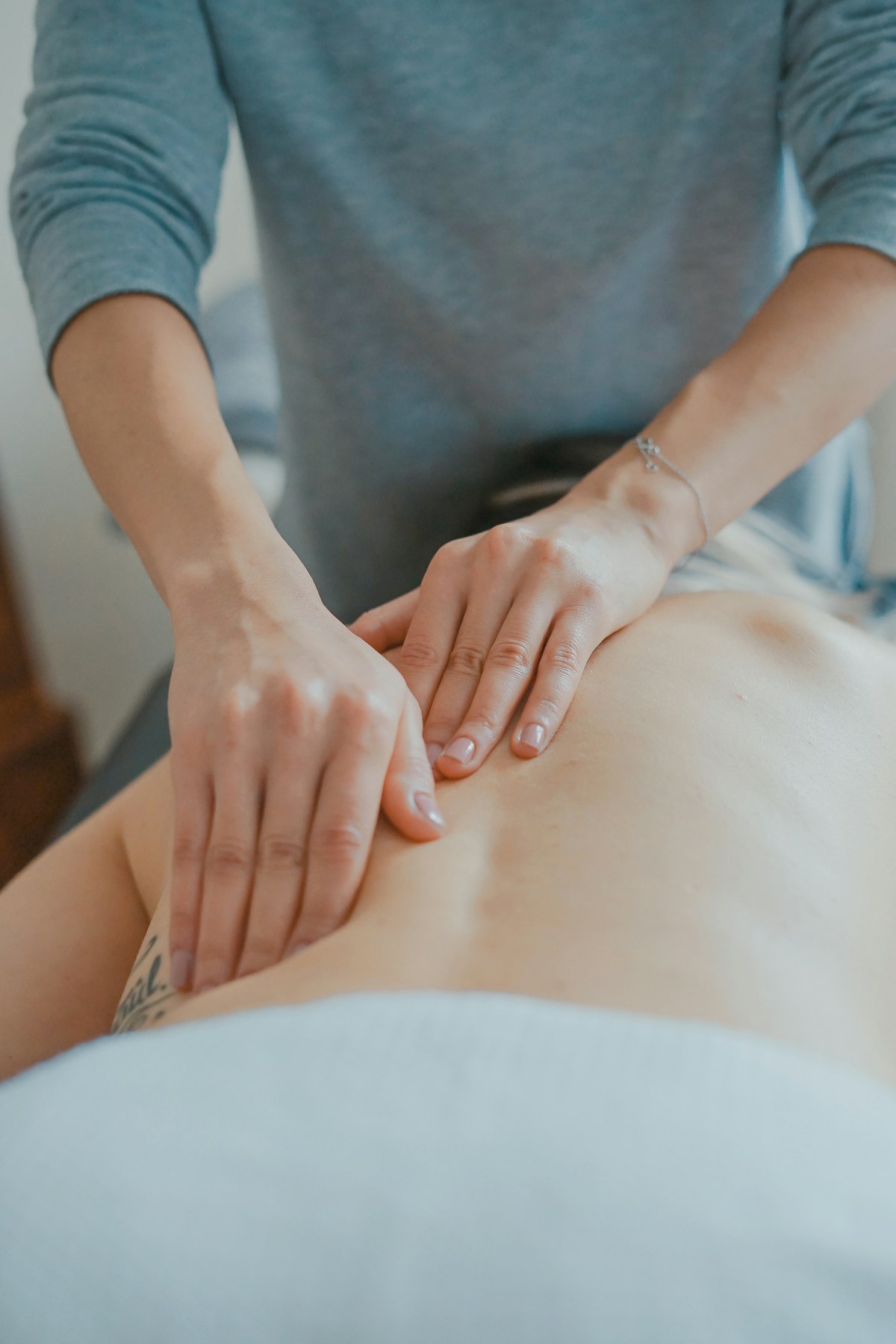
How to Relieve Lower Back Pain at Home With Simple Massage Techniques
An at-home guide from the Relax subcategory
Lower back pain is one of the most common complaints among adults, whether it is from sitting too long at a desk, lifting something awkwardly, or just the general wear and tear of daily life. This region of the body bears a significant amount of weight and supports your entire torso, making it prone to strain. The good news is that you do not always need a prescription or a pricey appointment to find relief. With a few simple, effective massage techniques you can do at home, you can ease tension, improve circulation, and restore comfort, right in your living room.
Self massage allows you to address trigger points in real time. By focusing on the lumbar region, you can break the cycle of pain and stiffness that often leads to limited mobility. Here is how to relieve lower back pain at home using gentle, accessible massage methods, no special equipment required.
What You'll Need
🌿 Why Massage Works for Lower Back Pain
Massage is more than just a luxury. It is a functional tool for recovery that works through several physiological mechanisms. Specifically, massage helps by:
- Increasing blood flow to tight muscles, which delivers essential oxygen and nutrients while helping to remove lactic acid and other metabolic waste.
- Reducing muscle spasms and stiffness by physically breaking up adhesions, which are the small bands of scar tissue that can form in the muscle fibers.
- Triggering the release of endorphins, which are your body’s natural painkillers, and reducing the level of cortisol, the hormone associated with stress.
- Improving flexibility and range of motion by loosening the fascia, the connective tissue that wraps around your muscles and can become restrictive when tight.
When done consistently, even 5 to 10 minutes a day can make a noticeable difference. The goal is to move from a state of chronic tension to a state of active recovery, allowing your muscles to relax and your joints to move more freely.
✋ 4 Simple At-Home Massage Techniques for Lower Back Pain
1. The Tennis Ball Roll (For Deep Tissue Release)
Best for: Trigger points and knots along the spine or hips
This technique mimics the effect of a deep tissue massage by using a small, firm object to apply concentrated pressure to a specific point.
How to do it:
- Lie on your back on a firm surface such as a yoga mat or a low pile carpet. Avoid using a soft bed, as the mattress will absorb the pressure and reduce the effectiveness.
- Place a tennis ball, or a lacrosse ball if you prefer more intense pressure, under the sore spot in your lower back. It is critical to avoid direct pressure on the spine, as the vertebrae are not meant to be compressed. Instead, focus on the fleshy muscles beside the spine.
- Gently shift your weight to let the ball press into tight areas. Once you find a tender spot, hold the pressure for 20 to 30 seconds. This allows the muscle to relax and release the knot.
- Slowly roll the ball side to side or up and down an inch or two to cover more area.
- Breathe deeply and relax into the pressure. Do not grimace or hold your breath, as this causes the muscles to tense up further. If you feel sharp or electric pain, ease off immediately.
Pro tip: Do this after a warm shower or using a heating pad for ten minutes when muscles are more pliable and responsive.
2. Palm Pressure Glides (For General Relaxation)
Best for: Overall tension and stiffness
These glides are designed to soothe the nerves and stretch the superficial layers of muscle without the intensity of a hard ball.
How to do it:
- Sit or lie on your side with your knees slightly bent to take the pressure off your lower lumbar.
- Warm a small amount of massage oil, coconut oil, or even a rich lotion between your palms. This reduces friction and prevents skin irritation.
- Using the heels of your hands, apply gentle, firm pressure and glide slowly upward from the hips toward the lower ribs. Follow the natural curve of your spine, moving from the center outward.
- Repeat 10 to 15 times per side. Move slowly and sync the movement with your breath. Inhale as you prepare the movement, and exhale as you glide upward.
- Focus specifically on the quadratus lumborum and erector spinae muscles, which are the thick bands of muscle running along either side of your spine. These areas often hold the most tension from prolonged sitting.
3. Knee-to-Chest Stretch + Massage Combo
Best for: Releasing tension in the lower back and glutes
By combining a stretch with a massage, you create more space in the joints while simultaneously relaxing the supporting muscles.
How to do it:
- Lie on your back on a comfortable surface and hug one knee gently toward your chest. This puts the lower back muscles in a stretched, vulnerable position, making them easier to massage.
- While holding the stretch, use your opposite hand to apply pressure. Use your fingertips or knuckles to make small, slow circular motions along the lower back and the upper buttock area, specifically where the muscle meets the pelvis.
- Hold the stretch for 20 to 30 seconds while continuing the circular massage, breathing deeply into the belly.
- Switch sides and repeat the process. For best results, repeat 2 to 3 times per side.
This combines passive stretching with targeted massage, making it an ideal routine for those dealing with morning stiffness.
4. Foam Roller or Rolling Pin Technique (If You Have One)
Best for: Broader muscle release along the lower back and hips
This is a wider approach to myofascial release, targeting larger groups of muscle at once.
How to do it:
- Sit on the floor with a foam roller placed horizontally behind you.
- Lean back slightly so the roller rests under your lower back. Again, avoid placing the roller directly on the spine. Target the muscles on either side of the lumbar vertebrae.
- Support your weight with your hands behind you and your feet flat on the floor to maintain control over how much pressure is applied.
- Gently roll forward and backward an inch or two. This small range of motion provides a targeted massage to the lumbar region without overextending the spine.
- Go slow and spend 30 to 60 seconds total. Stop immediately if you feel sharp pain.
No foam roller? Use a rolling pin wrapped in a thin towel for softer, more controlled pressure.
💡 Tips for Success
- Consistency over intensity: Five minutes of daily maintenance is far more effective than a 30 minute session once a week. Regularity prevents tension from building up.
- Hydrate: Drink a full glass of water after massaging. This helps your kidneys flush out the metabolic waste and toxins released from the muscles during the process.
- Warm up first: A warm towel, a heating pad, or a warm bath preps the muscles for a better response and reduces the risk of strain.
- Listen to your body: A feeling of dull discomfort or a "good hurt" is normal. However, sharp or radiating pain is a sign to stop. Stop if you feel numbness, tingling, or worsening symptoms.
- Pair with posture awareness: Massage provides temporary relief, but reducing prolonged sitting and improving your ergonomics, such as using a lumbar support pillow, prevents recurrence.
When to Seek Professional Help
While self massage is excellent for mild to moderate tension, it is not a replacement for medical diagnosis. Consult a healthcare provider if you experience:
- Pain that lasts more than 2 weeks despite home treatment
- Numbness, weakness, or tingling that travels down into the legs
- Severe pain immediately following a traumatic injury or fall
- Loss of bladder or bowel control, which requires emergency care
These symptoms could signal something more serious, such as a herniated disc, spinal stenosis, or nerve compression, which require professional intervention.
Final Thought
You do not need a spa day to feel better. With just a tennis ball, your own hands, and a few mindful minutes, you can unlock real relief from lower back pain, right where you are. Make this part of your daily ritual. Whether it is after a long day at work, before you go to bed, or whenever your body whispers that it needs a little care, these techniques provide a path to wellness.
Your back carries you through every aspect of your life. Give it the attention and care it deserves to keep you moving forward.
Ready for the real thing? Find a Relax venue near you →