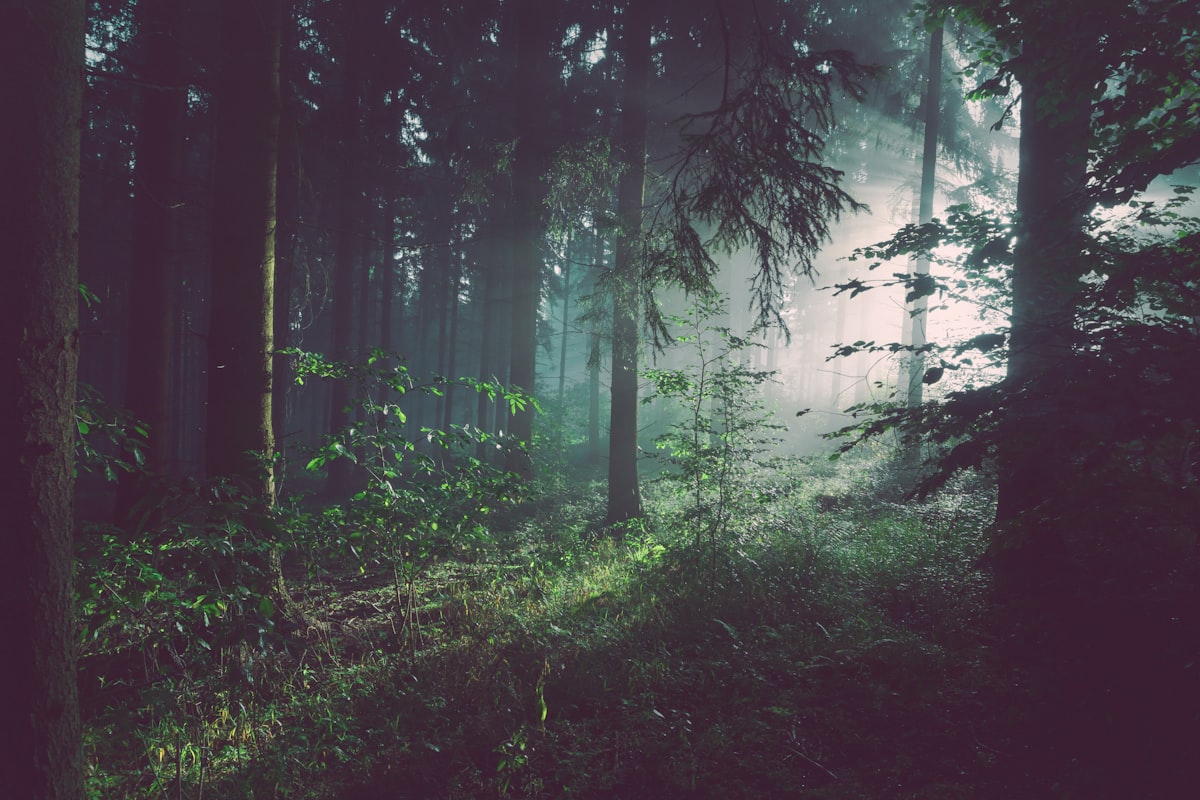
Forest Bathing: What It Is and the Science Behind It
In our fast-paced, screen-saturated world, many of us are searching for simple, natural ways to recharge, not just our phones, but our minds and bodies. We spend the majority of our waking hours indoors, under artificial lighting and surrounded by the hum of electronics. This disconnection from the natural world often leads to a sense of mental fatigue and emotional depletion. Enter forest bathing, a practice that sounds whimsical but is rooted in deep tradition and increasingly backed by science. No swimsuit required. No actual bathing involved. Just you, the trees, and a quiet invitation to slow down and reconnect with the earth.
What Is Forest Bathing?
Despite its name, forest bathing (shinrin-yoku in Japanese) does not involve water at all. Coined in the 1980s by the Japanese Ministry of Agriculture, Forestry, and Fisheries, shinrin-yoku translates to taking in the forest atmosphere or forest bathing. It is a mindful practice of immersing oneself in a forest environment, engaging all the senses to absorb the sights, sounds, smells, and textures of nature. While a walk in the woods might seem like a common activity, forest bathing is distinct because of its intentionality. It is not a workout, a hike to reach a summit, or a way to get your steps in for the day.
Think of it as nature’s version of meditation, but instead of focusing on your breath in a silent room, you are listening to rustling leaves, feeling the breeze on your skin, inhaling the earthy scent of pine and damp soil, and observing the dappled sunlight filtering through the canopy. It is a sensory experience that anchors you in the present moment. Instead of thinking about your to-do list or scrolling through social media, you are encouraged to notice the intricate patterns of moss on a stone or the rhythmic sound of a distant creek.
It is not about hiking for exercise or checking off trails. It is about being, not doing. There is no destination to reach and no specific pace to maintain. Just presence. By removing the goal of distance or speed, you allow your mind to shift from a state of achievement to a state of observation.
The Science Behind the Serenity
What began as a cultural wellness practice in Japan has sparked a growing body of scientific research globally. Studies from Japan, South Korea, Finland, and the U.S. are revealing measurable benefits of spending mindful time in forests. Researchers use a variety of metrics, from salivary cortisol tests to heart rate variability, to prove that nature has a tangible biological impact on humans.
Here is what the science shows:
1. Reduced Stress Hormones
Multiple studies have found that forest bathing significantly lowers cortisol levels, which is the body’s primary stress hormone. When we are chronically stressed, our bodies remain in a state of high alert, which can lead to inflammation and sleep disturbances. One landmark study published in Environmental Health and Preventive Medicine showed that participants who spent time in forests had lower cortisol, lower heart rate, and lower blood pressure compared to those in urban environments. The physical environment of a forest, with its fractal patterns and soft colors, naturally signals to the brain that it is safe to relax.
2. Boosted Immune Function
Trees release natural compounds called phytoncides, which are antimicrobial volatile organic compounds that protect them from pests and disease. These are the scents we often associate with the forest, such as the smell of pine needles or cedar. When we breathe in these substances, our bodies respond by increasing the activity of natural killer (NK) cells, a type of white blood cell that fights tumors and virus-infected cells. Research from Nippon Medical School in Tokyo found that a single forest bathing trip could boost NK activity for up to 30 days. This suggests that the benefits of nature are not just momentary, but can provide a lasting shield for the immune system.
3. Improved Mood and Mental Health
Forest bathing has been linked to reduced symptoms of anxiety, depression, and anger. A 2019 meta-analysis in Frontiers in Psychology concluded that exposure to forest environments leads to significant improvements in psychological well-being. The calming effect is not just psychological, it is physiological, tied to shifts in nervous system activity from fight-or-flight (sympathetic) to rest-and-digest (parasympathetic). This shift allows the body to enter a state of recovery, reducing feelings of irritability and fostering a sense of inner peace and emotional stability.
4. Enhanced Focus and Creativity
Ever notice how your best ideas come on a walk in the woods? There is science for that too. Attention Restoration Theory (ART) suggests that natural environments gently engage our attention without draining it, allowing our directed attention, the kind we use for work and screens, to recover. In an urban setting, our brains are constantly filtering out noise and distractions, which is mentally exhausting. In nature, we experience soft fascination, which allows the mind to wander and reset. This leads to improved focus, mental clarity, and even boosted creativity once we return to our tasks.
How to Practice Forest Bathing
You do not need a remote wilderness or a professional guide to begin. The essence of the practice is accessibility. Here is how to start:
- Choose a green space: A dense forest is ideal, but any tree-filled area can work. This could be an urban park, a wooded trail, or even a leafy neighborhood with old-growth trees. The key is to find a place where you feel safe and can minimize urban noise.
- Leave distractions behind: Silence your phone or leave it in your pocket. This is not the time for photos or podcasts. While it is tempting to document the experience, the goal is to be fully present. If you must take a photo, save it for the very end of your session.
- Engage your senses: Pause often and ask yourself what you perceive. What do you see in the periphery of your vision? What sounds are furthest away, and which are closest? Smell the air and the soil. Touch the rough bark of a tree or the cool surface of a leaf. Breathe deeply, imagining the forest air filling your lungs.
- Walk slowly, or do not walk at all: Meander without a purpose. Let your curiosity lead you. Sit on a fallen log and watch the insects. Lean against a sturdy trunk and close your eyes. Let your body find its own natural rhythm, moving only when you feel the urge to move.
- Stay for at least 20 minutes: Benefits begin to appear after about 20 minutes, as the body starts to shed the tension of the city. Peak effects are often found around two hours, but even a short pause during a lunch break can provide a necessary mental reset.
A Prescription for Modern Life
Some doctors in Japan and elsewhere now prescribe forest bathing as part of preventive healthcare. They recognize that nature is not just a luxury, but a biological necessity. It is easy to see why: it is free, accessible, has no side effects, and offers profound benefits for both body and mind. By integrating these moments of stillness into our weekly routines, we can mitigate the effects of burnout and chronic stress.
In a world that glorifies busyness and constant productivity, forest bathing is a quiet act of rebellion. It reminds us that wellness is not always found in another app, another supplement, or another high-intensity workout. Sometimes, it is as simple as stepping under the trees and remembering how to breathe.
So the next time you feel frayed, distracted, or drained, consider trading screen time for tree time. Let the forest do what it has always done best: heal, restore, and remind us we are part of something alive, ancient, and deeply grounding.
Your recharge awaits, not in a notification, but in the whisper of the wind through the leaves. 🌲✨
Category: Recharge
Looking for more ways to restore your energy? Explore our recharge collection for mindful practices, nature-inspired rituals, and science-backed wellness tips.